What Are Psilocybin Mushroom Spores? A Complete Beginner’s Guide
Psilocybin mushroom spores are microscopic reproductive cells produced by mature mushrooms. They contain the genetic information required for fungal reproduction and are commonly studied by mycology enthusiasts, collectors and researchers using a microscope.
Although the mushrooms that eventually develop from compatible spores may contain psilocybin, the spores themselves do not. This makes them an interesting subject for microscopy and fungal identification.
Whether you’re new to mycology or looking to understand fungal biology in more detail, learning about psilocybin mushroom spores is an excellent place to begin.
What Are Psilocybin Mushroom Spores?
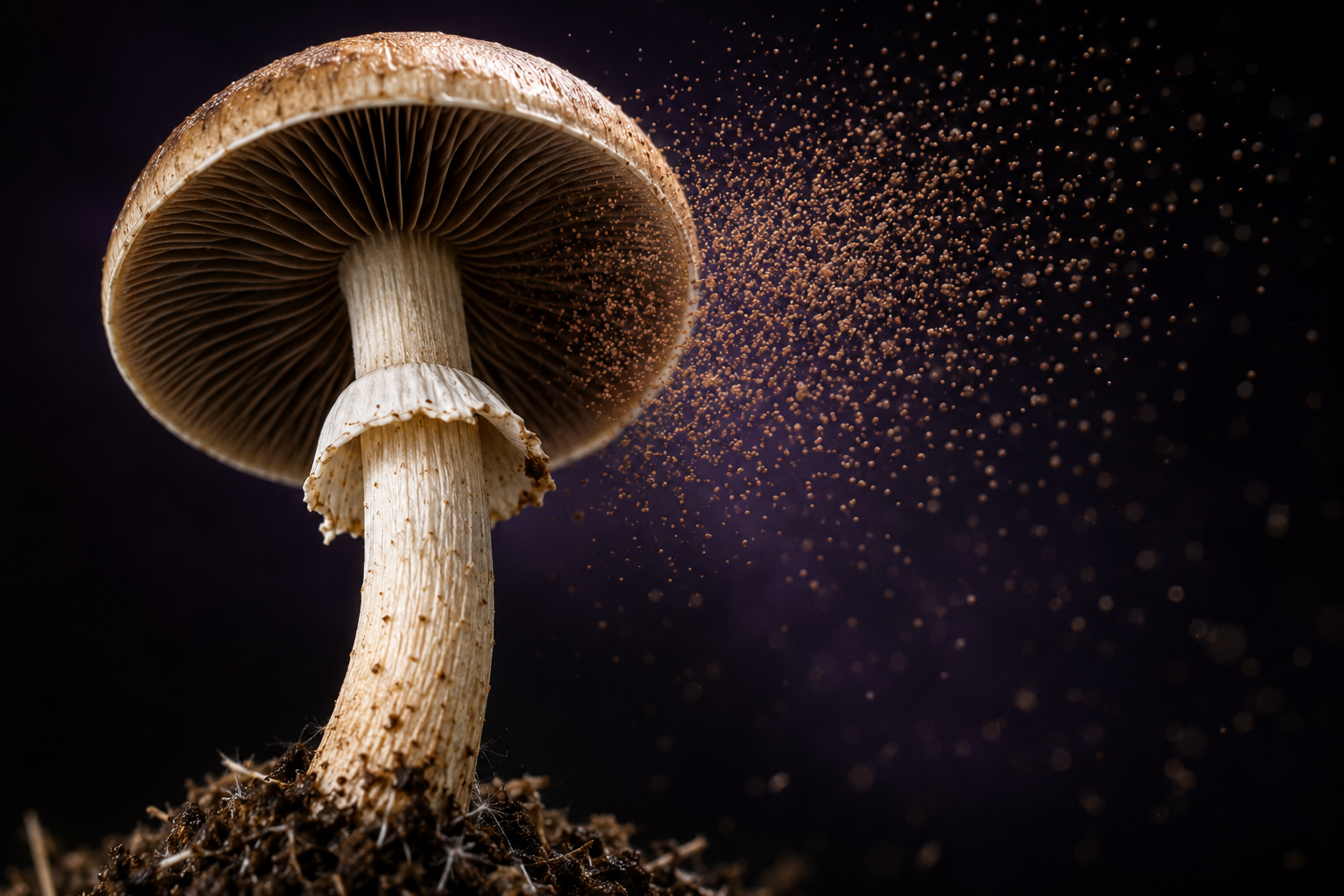
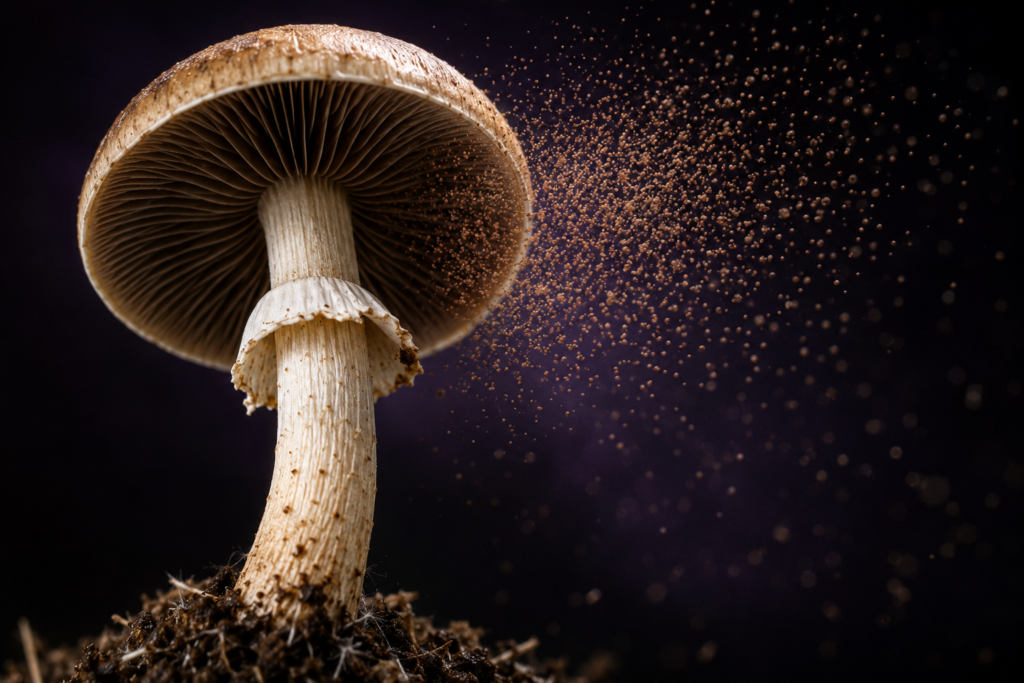
Every mature mushroom releases millions of microscopic spores from specialised cells located on its gills. These tiny reproductive cells are carried by air currents and, under suitable conditions, may combine with compatible spores to begin the fungal life cycle.
Unlike plant seeds, individual mushroom spores cannot grow into a mature mushroom on their own. Compatible spores must first join together to form mycelium before further development is possible.
How Are Mushroom Spores Produced?
As a mushroom reaches maturity, specialised cells lining the gills continuously create spores. Once fully developed, they are naturally released into the surrounding air.
Different mushroom species produce spores in a variety of colours, including white, cream, pink, rusty brown, purple-brown and black. Spore colour is one of the most valuable characteristics used when identifying fungi.
Studying Psilocybin Mushroom Spores
Microscopy is one of the most common ways to study psilocybin mushroom spores. Under magnification, mycologists examine several important characteristics, including:
- Spore size
- Shape
- Colour
- Surface texture
- Germ pore position
These microscopic characteristics help distinguish closely related species and contribute to accurate fungal identification.
What Is a Spore Print?
A spore print is created by placing a mature mushroom cap on clean foil or paper and allowing spores to fall naturally over several hours.
The resulting deposit reveals the colour of the spores and provides another valuable identification feature. Spore prints are widely used by collectors because they are compact, easy to store and preserve microscopic material well.
Spore Prints vs Spore Syringes
Both spore prints and spore syringes contain psilocybin mushroom spores, but they are prepared differently.
Spore prints consist of dry spores collected on foil or paper and are popular for long-term storage.
Spore syringes suspend spores in sterile water, making them convenient for preparing microscope slides and observing spores under magnification.
Are Psilocybin Mushroom Spores Legal?
The legal status of psilocybin mushroom spores varies depending on your country and local laws. Anyone interested in collecting or studying spores should always research the regulations that apply in their jurisdiction before obtaining them.
Frequently Asked Questions
Can you see mushroom spores without a microscope?
Individual spores are too small to be seen with the naked eye. However, millions of spores together form the visible deposit known as a spore print.
Why are spores important for identification?
Professional mycologists use spore colour, size and shape to distinguish species that may appear almost identical externally.
Do all mushrooms produce spores?
Yes. Nearly all mushrooms reproduce by producing microscopic spores from specialised reproductive surfaces beneath or around the cap.
Final Thoughts
Psilocybin mushroom spores provide a fascinating introduction to fungal biology, microscopy and species identification. Understanding how spores are produced, dispersed and examined helps build a solid foundation for anyone interested in the science of fungi.
Scientific fungal taxonomy can also be explored through MycoBank
Whether you are just beginning your mycology journey or expanding your knowledge of fungal taxonomy, studying spores remains one of the most rewarding aspects of mushroom research.